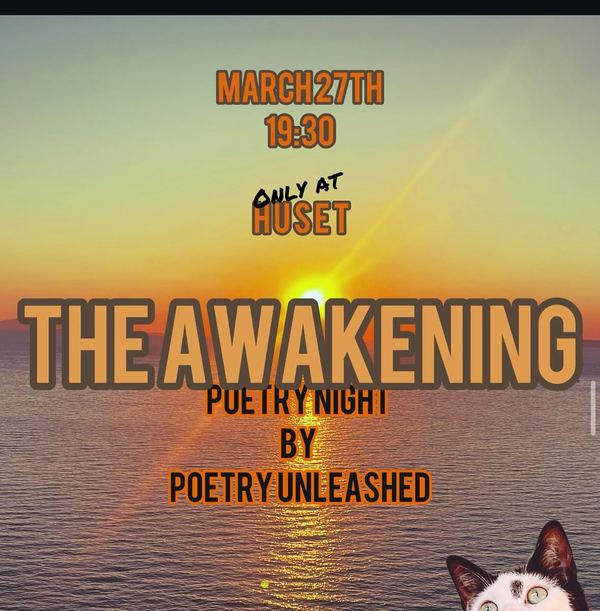
An international open stage for raw voices through the long dark. Every month a new theme. No gatekeeping. Just words, out loud.
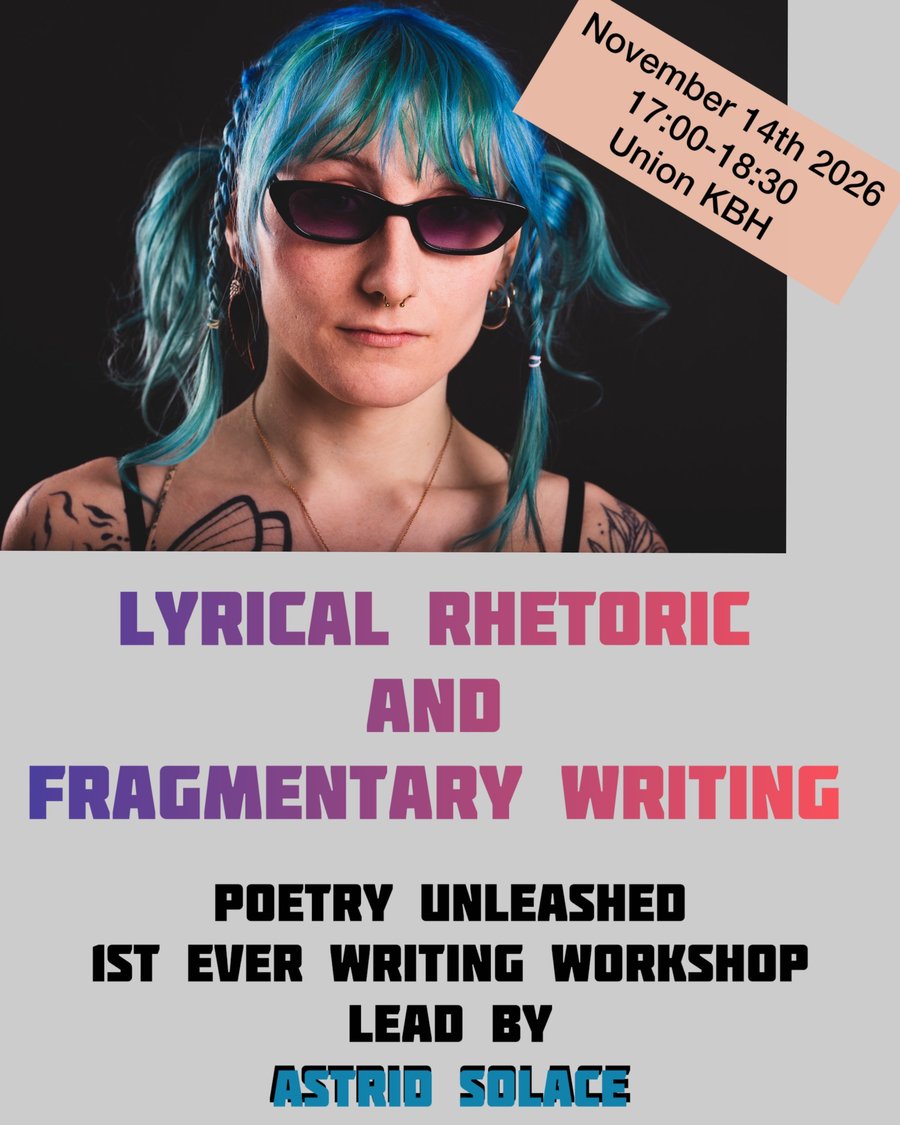
A hands-on session on the lyric essay, a hybrid of poetry, essay and memoir that does not need to be factual. Together we will:
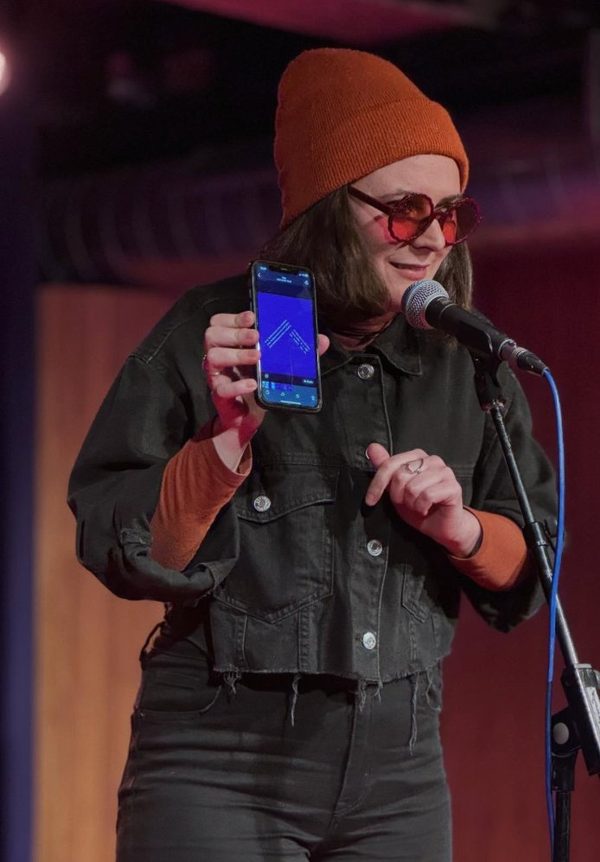
Astrid Solace is a multi slam-winning performance poet from Birmingham, UK. In May she published a lyric essay, On Orgasms, Jesters and Autism, as a transgender surgery fundraiser, and her debut stage play, How to Change a Tire, premieres at the Outside In Theatre in Los Angeles on December 5th. This is the 19th date of her international poetry tour, Whatever it Takes.
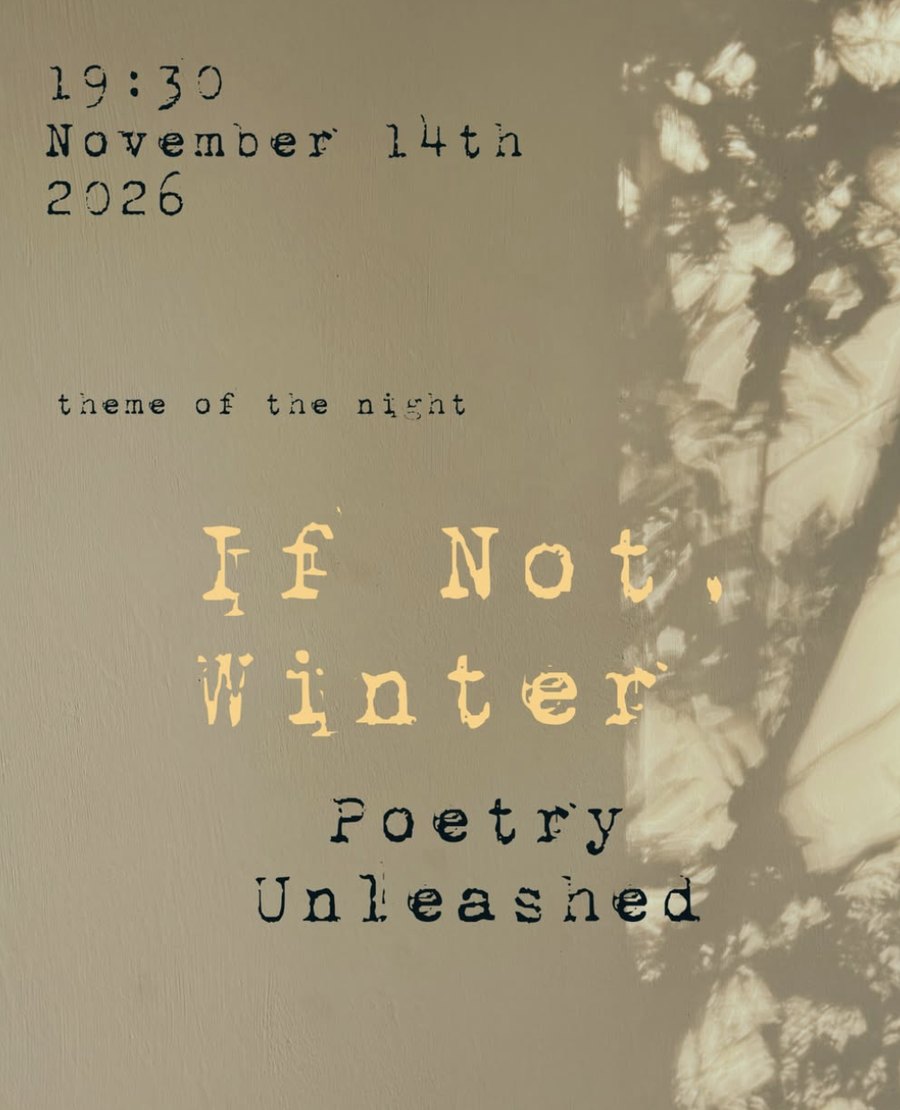
A night for the long dark. We celebrate Anne Carson, this year's Nobel laureate in Literature, and keep weaving the spoken word tradition she carries, from Sappho to now. We dread winter together, get inspired by her ideas, lectures and essays, and dive deep into poetry and the cold. Get cosy. Come loud.
Want to read your work on the night? Sign up in the comments on our Instagram or Facebook, or by email to hello@poetryunleashed.dk.
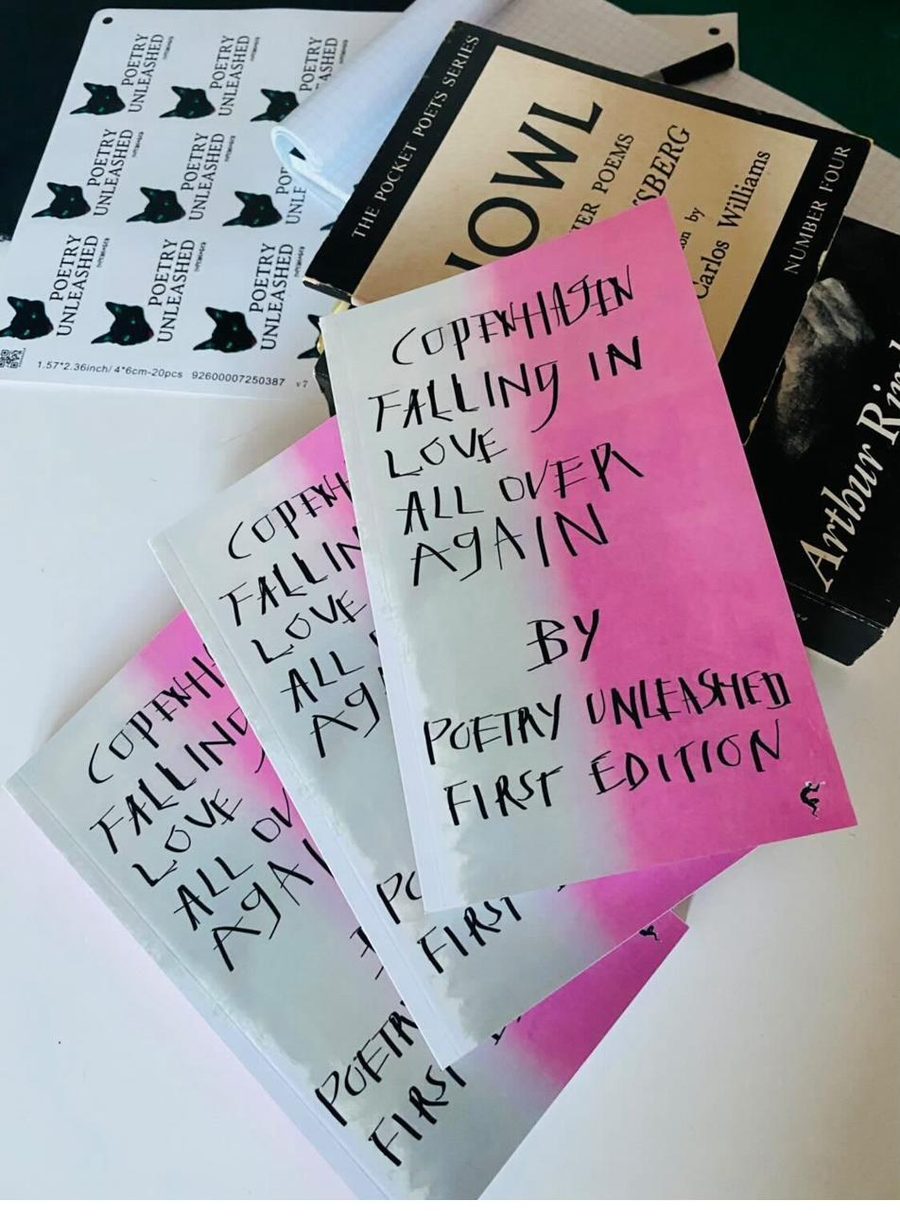
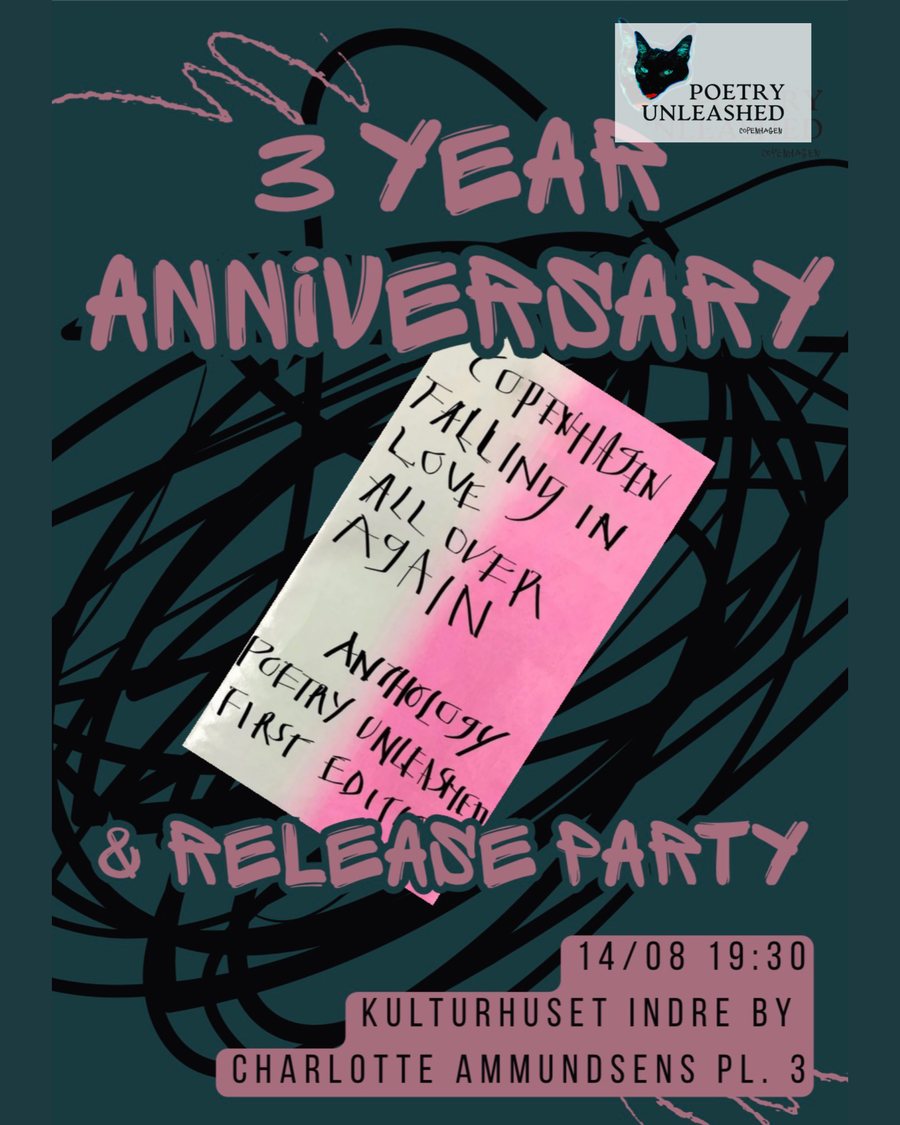
Three years of voices that refused to behave, dragged off the open mic and pressed onto paper. Our first edition: the lines that went off in the room, now bound and loose on the city. Raw, unedited, exactly as they landed. The print run is small. When it's gone, it's gone.
Two ways to get it. Pick it up in person at Copenhagen Contemporary, or order it by mail: email hello@poetryunleashed.dk with your shipping address, and transfer 180 DKK to Arinamoves · reg. 5301 · konto 0000294938.
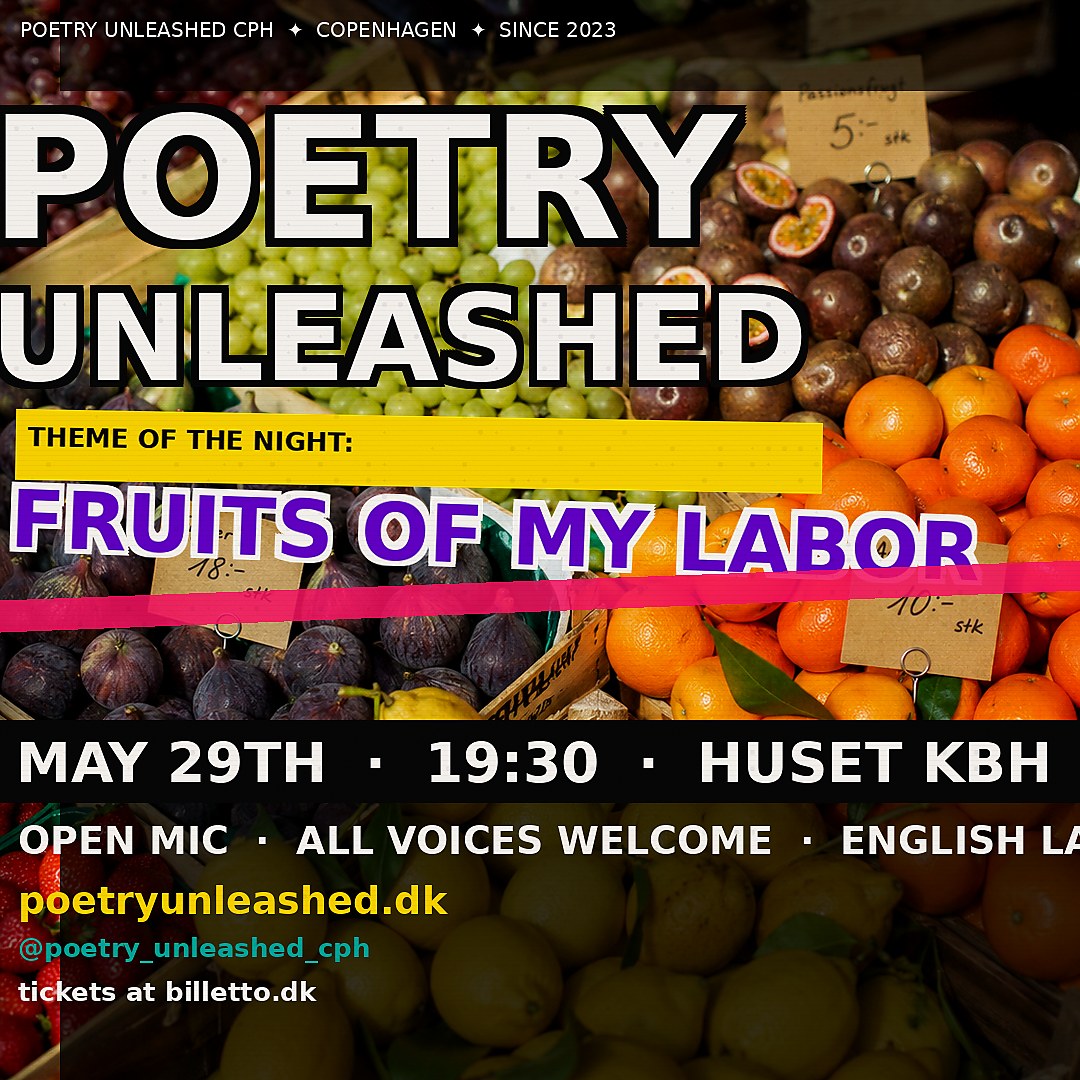
Order by mail →In the Philippines, even my dreams need exact change. “Work hard,” they say. So I did, I still do. My alarm and I meet at five every morning. At this point, we should be celebrating our 10th anniversary. Though, to be fair, it has never bought me flowers. I pay for the ride. The water. The light. The internet. The food. And somehow, before payday has even learned my name, my salary is already saying goodbye. I wish I could travel as often as my money does. “Start a side hustle,” someone says. Of course. Apparently, my job also needs a job. Maybe the two of them can split the rent. And when I finally come home... my mother switches off the kitchen light as if darkness could lower the electric bill. She looks at what is left beside the rice. Counts quietly. One bill. Two coins. Tomorrow’s fare. I leave some money on the table. She pushes it back. “You’ll need this tomorrow.” And suddenly, I understand why people call us resilient. Because somehow we have learned to stretch everything— rice, salary, patience, hope. We stretch them until they almost disappear and still call what remains “enough.” But sometimes, I am tired of being called resilient. I am sick of hearing another lesson in surviving. I want my mother to leave the kitchen light on until we finish eating. I want to leave money on the table and not wonder which need she will postpone because of me No calculations. No quiet sacrifice hidden beneath the words “I’m okay.” No dividing tomorrow into portions small enough to survive today. The bus driver can ask for exact change. The electric company can tell me exactly what I owe. The landlord can count every peso that I pay But why must we measure our lives the same way? How many meals until payday? How many hours of overtime before one quick holiday stops feeling irresponsible? How many dreams can we afford after rent? I imagine a day when enough finally means enough. Enough for the driver still working long after sunset. bringing everyone home before he can go home himself. Enough for the cashier counting her own coins after spending all day counting everyone else’s. Enough for the nurse finishing another night shift, caring for strangers while wondering who is looking after the people waiting for her at home. Enough for the overseas worker who sends half the paycheck home and learns to call whatever is left a budget. Enough for the mother who says she is already full because there is only one piece of chicken left. Enough for the eldest daughter who keeps wearing the same shoes because someone else needs new ones first. Enough for that person who is always asked, “Can you help?” and has somehow forgotten what it feels like to be the one who can say, “I need help” Enough for all of us who have become so good at making little things stretch that people mistake survival for having enough. So I dream. I dream for a day when coming home tired means only this: “the work is finished.” Not, I’ll continue this at home. Not, there is another bill waiting. Not. who can we borrow from this time? And maybe that is the dream. Not mansions. Not millions. Not waking up rich. Just waking up without being afraid of how much being alive will cost today. So when my mother asks me, “Do you have enough for tomorrow?” I want to say, “Yes.” And mean it. I want to leave the money on the table. Leave the kitchen light on. Sit beside her. Take another spoonful of rice without wondering if I should save some for tomorrow. Then ask, “Ma, do you want some more?” And hear her say, “Yes.” Not because she finally decided to take the last piece. Not because she is pretending to be full. But because, for once, there is enough. Enough food. Enough light. Enough for tomorrow. Enough that neither of us has to count ever again.
Tko te jebe, nek ti piše pjesme — a Croatian expression that translates into Whoever's fucking you should be writing you poems.
Copenhagen causes cute coping challenges, creating connections, contemplating change, collapsing carefully curated circles, choosing creativity, cemetery cycling, cocktails, cafes, countless chances, coming closer, cracking codes, customs, cultures conform, crumble, cross complicated conformity contests, create charming concoctions, cultivate community construct colorful celebrations cherishing Copenhagen city
At 1 pm the flowers shine bright over the frozen ice-cream field – as seen from a dusty train window Behind my left shoulder a lady is having an aneurysm over the sheer number of decibels I am producing while speaking on the phone with my beloved brother. (Astonishingly, mid-day.) This is a family zone, I tell her. So instead of sitting here blaming me for your misfortune, why don't you also call someone? Before she could answer her hands flew for my neck, grabbing me like you would an ill-behaved rooster, ripe for the log. Unfortunately, she could not lift me up. My sack of organs, muscle mass, my illustrious hairs, all that poetry; she just couldn't lift it off the ground so I said okay I will be your friend. She didn't like that either. She now goes almost everywhere I go and lurks in the shadows. A part of me wishes she would come to the show. Pernille? Pernille, if you're listening, please answer me... is everything okay between us?
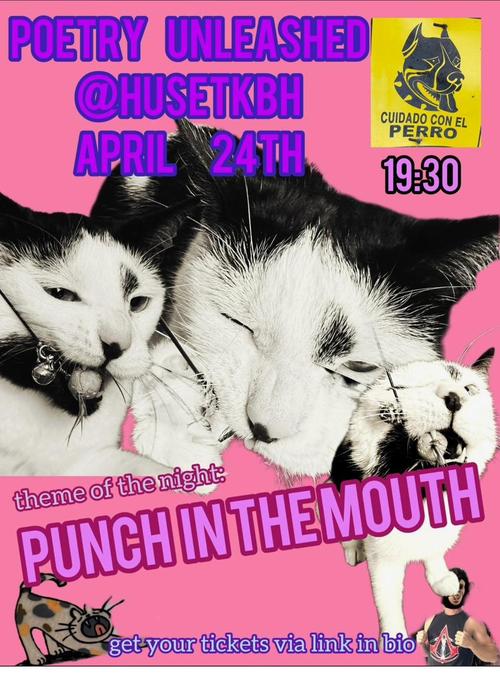
A punch in the mouth is: teeth, tongue, the sentence arriving before the person, a lip learning consequence, breakfast after honesty, your mother saying, well, what did you expect, the dentist asking if you grind at night, and you saying, only my soul. A punch in the mouth is: the word “actually,” said by someone younger than you, a mirror in public lighting, a birthday card with too much handwriting, a white shirt at a red wine event, and the slow discovery that your mysterious phase was just poor communication with better shoes. A punch in the mouth is: “just circling back,” “as discussed,” “kind reminder,” “quick question,” and the tiny violence of someone writing “hope this finds you well” when clearly it has found you in pieces. A punch in the mouth is: a therapist calling it progress, HR calling it alignment, your ex calling it growth, your bank calling it a lifestyle choice, and your body calling it Tuesday. A punch in the mouth is: love, sometimes, but not the pretty kind, not violins, not soft lighting, not two people becoming one, which always sounded like a tax problem anyway, but the kind of love that corrects your grammar and teaches your mouth to stop making promises your body cannot keep. A punch in the mouth is: the poem you over-explained, the metaphor that reported you, the audience coughing exactly where your heart was, the microphone waiting like a small black judge, and the first laugh saving your life by ruining your seriousness. A punch in the mouth is: the thing you finally say, the thing you cannot unsay, the apology already bleeding, the silence afterwards checking the room, the mouth, innocent, the opinions, planted. A punch in the mouth is: all of this, listed here for insurance purposes, minor impacts, daily corrections, romantic concussions, administrative bruises, and the occasional grace of being hit so precisely you finally know where you are.
Poetry belongs in bars and basements, not just on bookshelves.
The stage doesn't ask for a CV. It asks for something true.
The stage is open. No gatekeeping. No credentials required.
We are Copenhagen's international poetry community, performing primarily in English, open to the world.
Words that land like a punch in the mouth are the ones worth saying.
Poetry Unleashed Copenhagen started in 2023 because poetry needed a room with no walls, a place where a first-timer stands next to a seasoned writer, and both are equally welcome on stage.
Every month we pick a theme, open the doors, and let the world speak for itself. We perform primarily in English, bringing together poets and listeners from across the globe, right here in Copenhagen.
This is your community. Come be part of it.
Photo: @lisaotto.dk
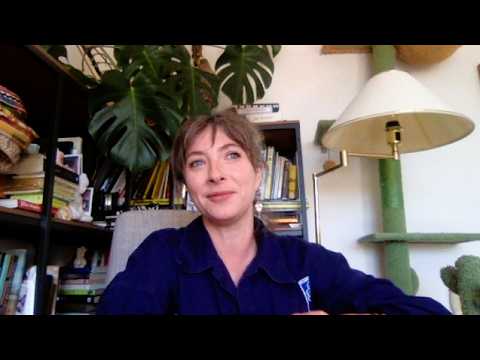
Arina hosts Poetry Unleashed CPH with the belief that a room full of honest voices is something worth building, and protecting. She creates a space where people feel free to show up as they are, say what they mean, and listen like it matters.
Poetry Unleashed is her invitation to anyone who has ever felt something too large for ordinary language. The stage is open. The room is real.
Instagram